Latest News
Maintaining the Growth and Resilience of Music Streaming
Over the past 15 years, streaming has transformed the music industry, pulling audiences away from piracy and turning hundreds of millions of listeners into paying subscribers.
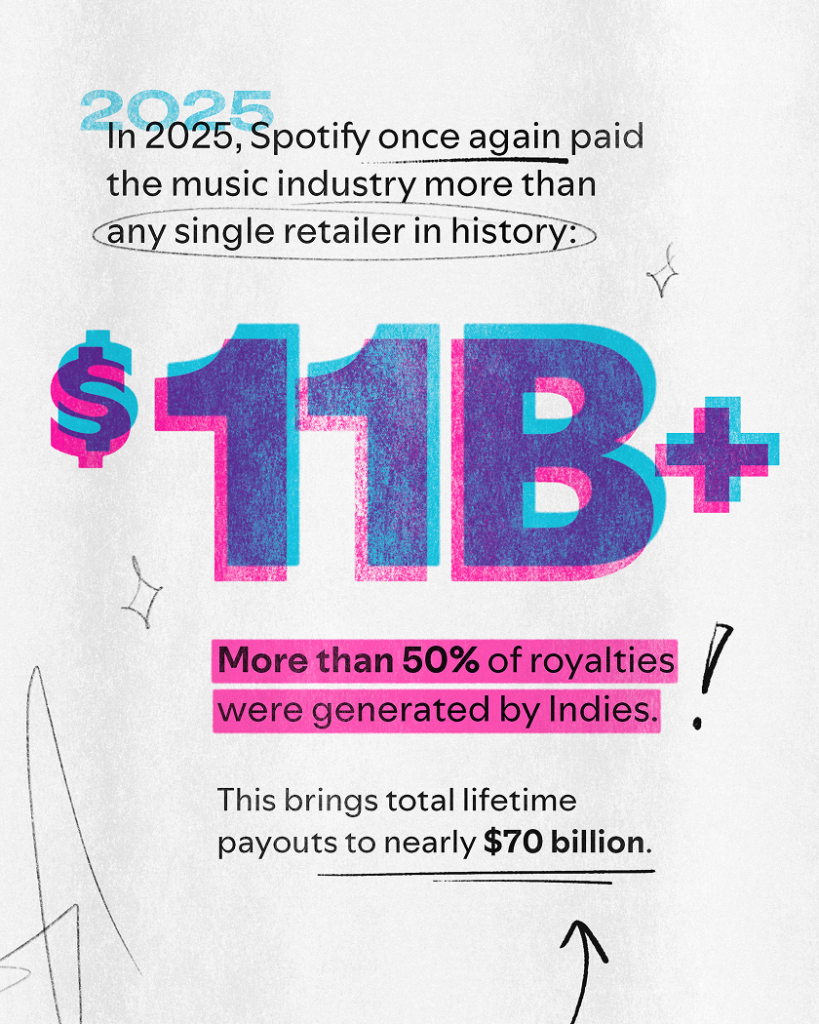
In 2025, Spotify paid more than $11 billion in royalties to music rightsholders — the largest single‑year payout by any company in music history. Today, Spotify’s payouts represent more than 20% of the global music rights value.
Rightsholders — including labels and publishers — receive roughly two‑thirds of every dollar Spotify generates from music. As our business grows, so does the music royalty pool.
That growth is translating into broader, more durable artist success: there are now more artists generating over $100,000 a year from Spotify alone than were getting stocked on record store shelves at the height of the CD era.
However, more remains to be done.
Through thoughtful policy — developed by governments in partnership with industry stakeholders — we can build on the progress already made to grow music royalties further and reduce inefficiencies in the music ecosystem. This can benefit both artists and fans.
At Spotify, we believe policy can play a critical role in supporting a streaming economy that maximizes artists’ earning potential by expanding total music revenues and making sure more of that money reaches the creators and teams who earn it. That belief informs our policy vision, which focuses on two priorities today:
Today’s royalty system depends on metadata, numerous databases, and licensing processes that vary across regions and jurisdictions, creating significant complexity that can delay payments, limit visibility, and in some cases prevent earnings from reaching creators.
Getting royalties to the right people and building many new products depends on accurate information about each track, including who created it and who represents it (also known as metadata or ‘identifiers’). Too frequently, gaps or inconsistencies in this information create confusion, slow down payments, and leave royalties undistributed.
Streaming services like Spotify do not pay songwriters directly. Instead we pay collecting societies and publishers who in turn pay songwriters. And, even for publishers, royalties often flow through collective management organizations (CMOs), which play a vital role in licensing works at scale, navigating local markets and regulations, matching usage data, and distributing payments worldwide. This long-standing model supports the global music economy, but its complexity can make it harder to track royalty flows end to end and to build the clear, consistent evidence needed to inform effective music policy making.
Limited public transparency of royalty payouts from streaming services overall makes it hard for policymakers, artists, and industry participants to understand streaming’s full economic impact. This impedes effective, evidence-based policymaking.
Even with tens of billions of dollars now flowing into music, global revenue could grow further by combatting fraud to protect the integrity of legitimate digital markets, ensuring artists are not excluded by policy barriers, and recognizing that all music ecosystem stakeholders play a role in guarding against threats such as fraud, including AI impersonation.
Unlicensed online platforms and fraudulent activity divert audiences and revenue away from legitimate services and creators. Sustained and coordinated action is essential to reduce harm, protect market integrity, and ensure revenues flow through licensed channels.
Advances in AI are being widely adopted by music makers but they can be misused by bad actors to impersonate artists without authorization, exploiting their identity and undermining the integrity of their work, or to flood services with mass uploads, duplicates, artificially short tracks, and other forms of slop. Left unchecked, these practices can erode trust and divert royalties away from legitimate creators. While individual services can deploy customized anti-fraud solutions, shared standards can make enforcement more efficient across the industry by reducing duplicative effort for labels, distributors, and streaming services, while also giving consumers more consistent, meaningful information about how AI is used in music creation.
Some policy approaches would require streaming services to prioritize or recommend music based on an artist’s nationality or place of origin, interfering with consumer choice and restricting artists’ ability to reach international audiences on equal terms. In 2024, of the artists who generated more than $1,000 in royalties on Spotify, more than half saw most of their royalties come from listeners outside of their home countries. Protecting this export phenomenon is critical to preserving consumer choice and artists’ ability to break through and thrive across borders.
New taxes or levies on streaming risk undermining the paid subscription model — by increasing subscription fees to consumers and therefore increasing subscriber churn — and reducing the funds available to creators overall. They also directly limit the capacity to invest in new tools for artists, better anti-fraud measures, and more.
Collaboration and targeted reforms can grow the music royalty pie and improve how royalties flow, boosting transparency and ensuring earnings reach the right artists and songwriters. Spotify will continue to share data and practical insight to support evidence-based policy and long-term growth for creators and fans.
The $11B+ Growth Engine

The New Global Class of $100K Artists

Million Dollar Careers

The Rising 100,000th Artist

From Fresh Finds to Six Figures

The DIY Path to an Enduring Career

50%+ Comes From Abroad

